by

In today’s fast-paced digital era, relying on various software, applications, and online platforms has become a fundamental part of our daily routines. Whether you are a professional content creator, a student, an office worker, or simply someone who loves entertainment, digital tools drive productivity. However, managing subscriptions for all these services can quickly burn a massive hole in your wallet.
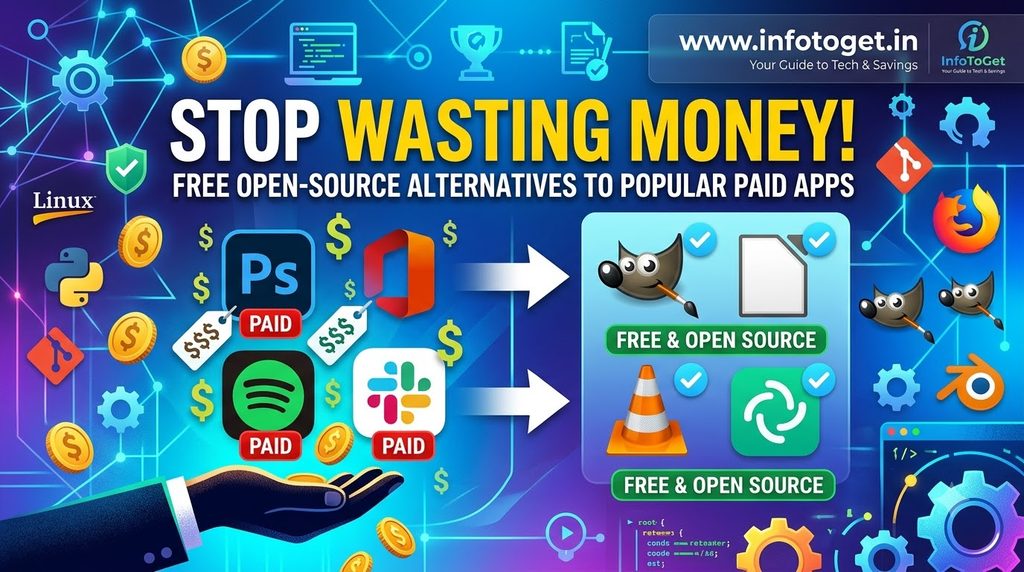
From video streaming and music apps to advanced artificial intelligence and graphic design suites, monthly and yearly fees accumulate into significant expenses. Fortunately, almost every mainstream paid tool has an exceptional, budget-friendly, or open-source alternative available in the market. In this article, we will take a deep dive into the top tools highlighted in the reference image, helping you optimise your workflow and entertainment without spending a single penny.
1. Netflix vs. Netmirror: Entertainment on a Budget
- The High Cost of Netflix: Netflix is undeniably a household name for movie buffs and series enthusiasts. However, its tiered monthly subscription plans can become quite expensive over time.
- The Free Alternative (Netmirror): If you want to stream movies and web series without committing to a hefty monthly bill, Netmirror serves as an alternative platform where users can explore diverse video content seamlessly.
2. Spotify vs. Jango: Unlimited Music Streaming
- Why Spotify Dominates: Music lovers frequently turn to Spotify for curated playlists and tracks, but unlocking ad-free listening and offline downloads requires a premium tier subscription.
- The Free Alternative (Jango): Jango is a web-based radio and music streaming service that allows you to listen to your favorite artists and discover new tracks without dealing with heavy subscription barriers.
3. ChatGPT vs. Compass: Smart AI Assistance
- The ChatGPT Premium Model: Artificial intelligence has revolutionized productivity, but accessing advanced models and priority servers on ChatGPT often demands a recurring monthly fee.
- The Free Alternative (Compass): For everyday AI assistance, writing aid, and smart task management, tools like Compass provide alternative pathways to boost efficiency without financial strain.
4. Canva vs. Vector: Creative Graphic Design
- The Appeal of Canva Pro: Creating stunning social media posts, flyers, and banners is easy with Canva, but many of its high-end elements, templates, and export features are locked behind a paywall.
- The Free Alternative (Vector): Vector graphics tools give designers the freedom to build scalable graphics, logos, and layouts entirely free of cost.
5. Gemini vs. Msty: Advanced AI Integration
- Gemini’s Advanced Ecosystem: Google’s Gemini tool helps users synthesize information and accelerate creative tasks, though advanced features typically require paid tiers.
- The Free Alternative (Msty): For managing local AI models and optimizing digital workflows, Msty offers a streamlined alternative environment for tech enthusiasts.
6. Disney+ vs. Tubi: Movies and Live Streaming
- The Disney+ Subscription: Families and sports fans often subscribe to Disney+ for live sports, blockbuster releases, and exclusive shows.
- The Free Alternative (Tubi): Tubi stands out as an ad-supported, completely free streaming service offering a massive library of movies and television shows with zero subscription fees.
7. Photoshop vs. Photopea: Professional Photo Editing
- The Industry Standard (Photoshop): Adobe Photoshop is the gold standard for professional photo editing and manipulation, but its software licensing costs can be prohibitive for beginners.
- The Free Alternative (Photopea): Photopea is an advanced, web-based image editor that mirrors Photoshop’s interface and supports PSD files natively, delivering professional editing capabilities right inside your browser for free.

8. Apple Music vs. Demus Music: Audio Streaming Options
- The Apple Music Ecosystem: Apple device users frequently lean toward Apple Music for its deep platform integration, which requires an active subscription.
- The Free Alternative (Demus Music): Demus Music offers a functional alternative for users looking to enjoy audio tracks and organize playlists without monthly charges.
9. YouTube vs. Rumble: Video Sharing and Creation
- The YouTube Experience: YouTube is the undisputed king of video content sharing, though ads and background play restrictions often push users toward YouTube Premium.
- The Free Alternative (Rumble): Rumble provides an alternative video hosting and viewing platform where creators and audiences interact freely without strict platform overheads.
10. Figma vs. Gravit Designer: UI/UX and Vector Work
- Figma for Teams: UI/UX designers rely heavily on Figma for collaborative layout creation, but expanding team projects requires paid organizational plans.
- The Free Alternative (Gravit Designer): Gravit Designer delivers powerful vector design tools suitable for detailed design workflows without requiring paid upgrades.
11. Notion vs. Obsidian: Productivity and Knowledge Management
- Notion’s Workspace: Notion is widely praised for database management and note-taking, but heavy database use and advanced features require paid workspace plans.
- The Free Alternative (Obsidian): Obsidian is an offline-first markdown knowledge base that keeps your notes secure locally while offering extensive customization and features completely free of charge.

Conclusion
Maximizing your productivity and entertainment value does not mean you have to exhaust your savings on endless software subscriptions. By exploring these smart, free, and open-source alternatives, you can maintain your professional output and personal enjoyment while keeping your expenses strictly managed. Adopting these tools keeps your workflow efficient and cost-effective.